

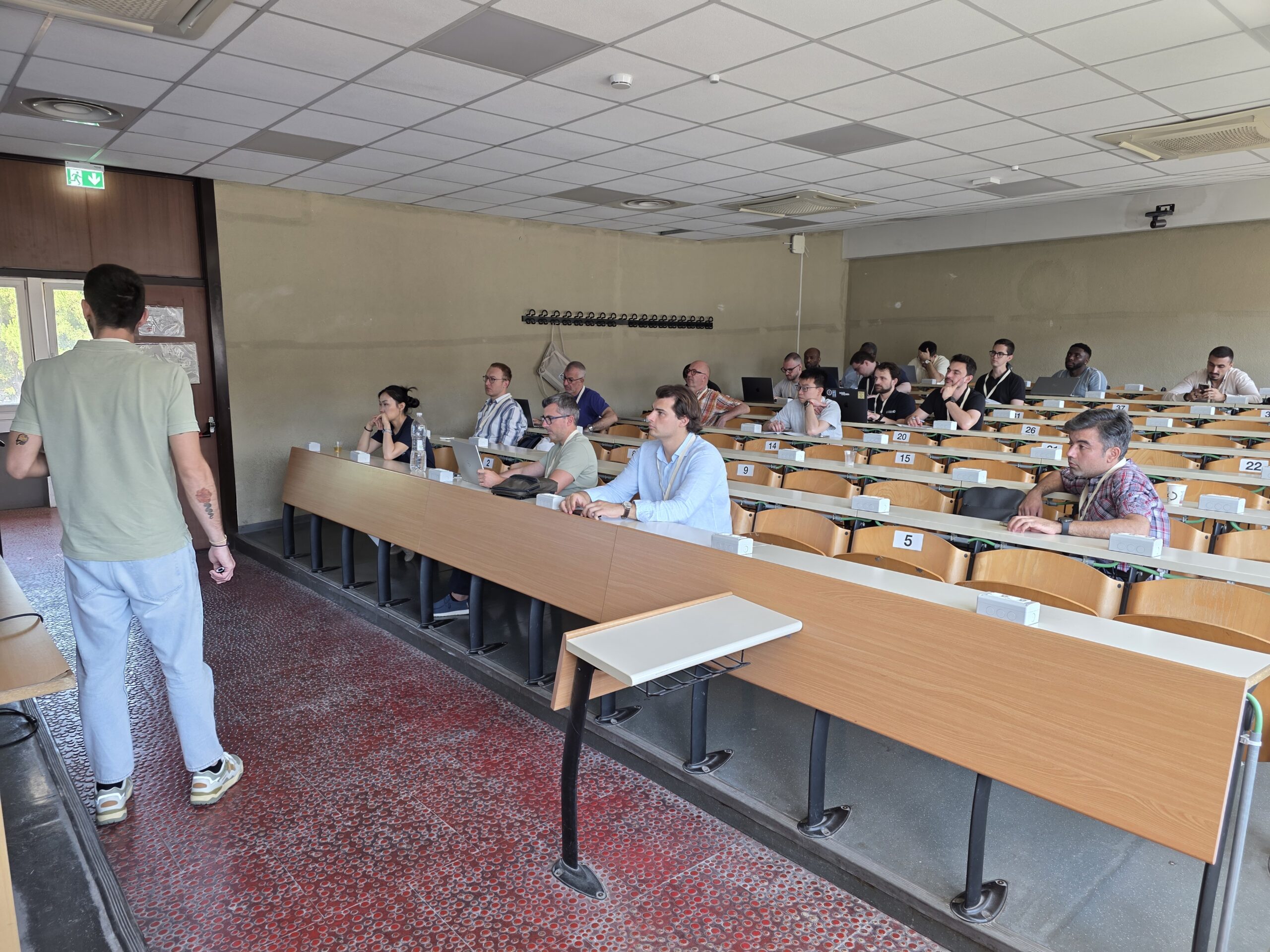
On 14 July 2026, the 6G-TWIN project successfully organised the special panel “Towards AI-Native 6G Networks: The 6G-TWIN Federated Simulation Framework” during the 12th International Conference on Control, Decision and Information Technologies (CoDIT 2026) in Bari, Italy.
Moderated by Gaetano Volpe (Politecnico di Bari), the panel brought together leading experts from academia and research to discuss how Network Digital Twins (NDTs) will underpin the next generation of AI-native 6G networks.
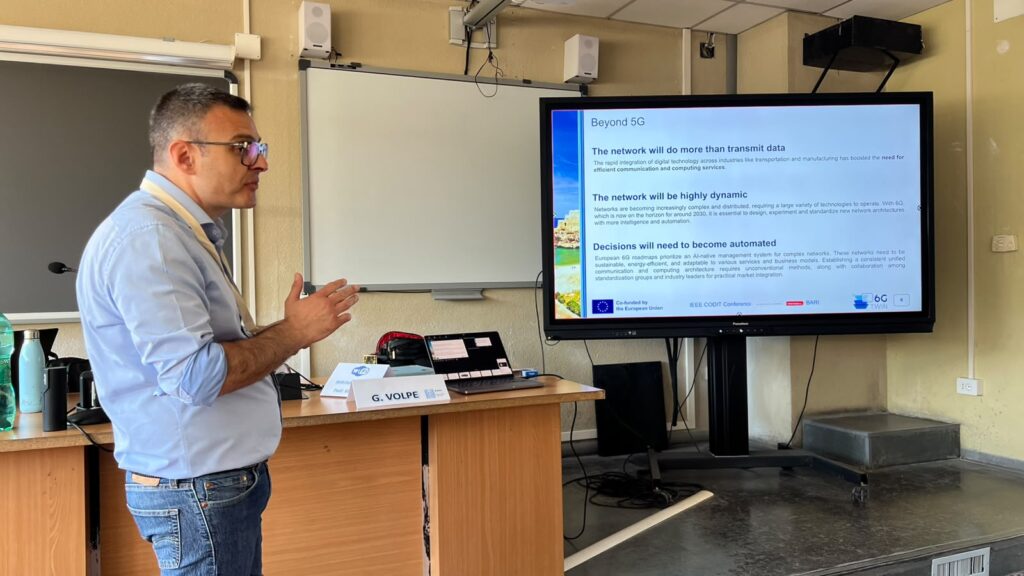
The panel featured contributions from:
- Giuseppe Avino (Luxembourg Institute of Science and Technology – LIST)
- Iskander Zellagui (Université Bourgogne Europe)
- Michele Marvulli (Politecnico di Bari)
The session introduced the 6G-TWIN Federated Simulation Framework, an open-source co-simulation platform designed to interconnect heterogeneous simulation environments through standardised interfaces, distributed execution, protocol translation and time synchronisation. By enabling interoperability between specialised simulators, the framework provides a flexible environment for developing and validating advanced 6G Network Digital Twins.
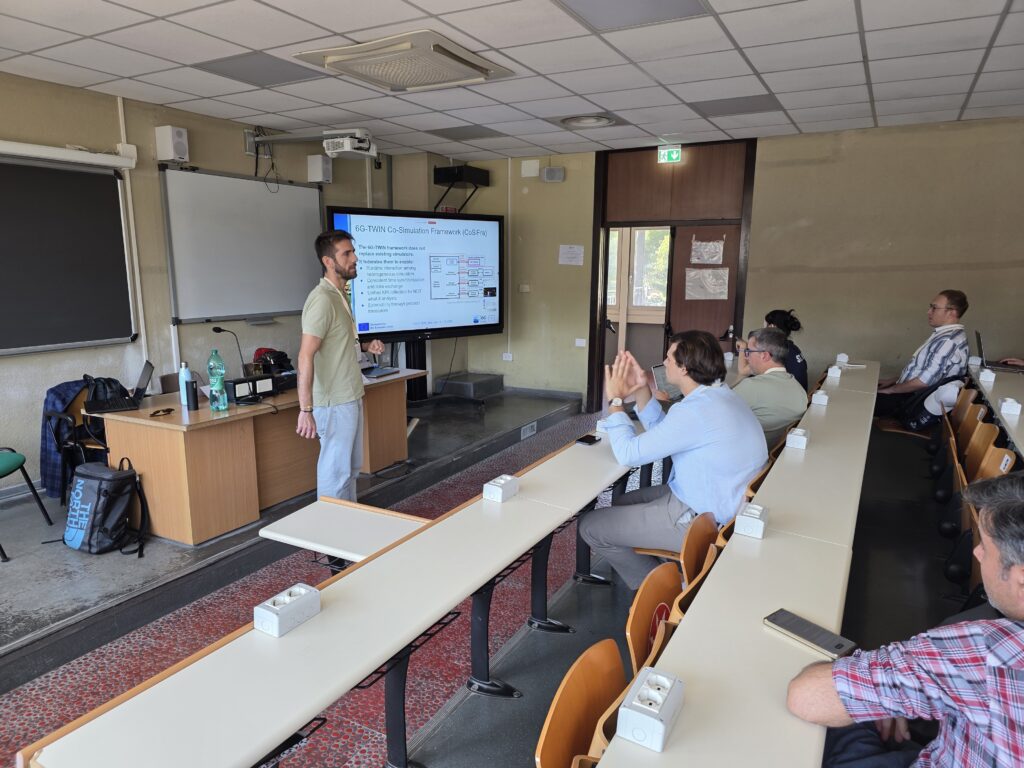
A major focus of the discussion was the integration of AI-driven functional models into digital twins to enable intelligent network management. The speakers explored how artificial intelligence can support capabilities such as routing optimisation, mobility management, coverage prediction and autonomous closed-loop network optimisation, paving the way for truly AI-native 6G systems.
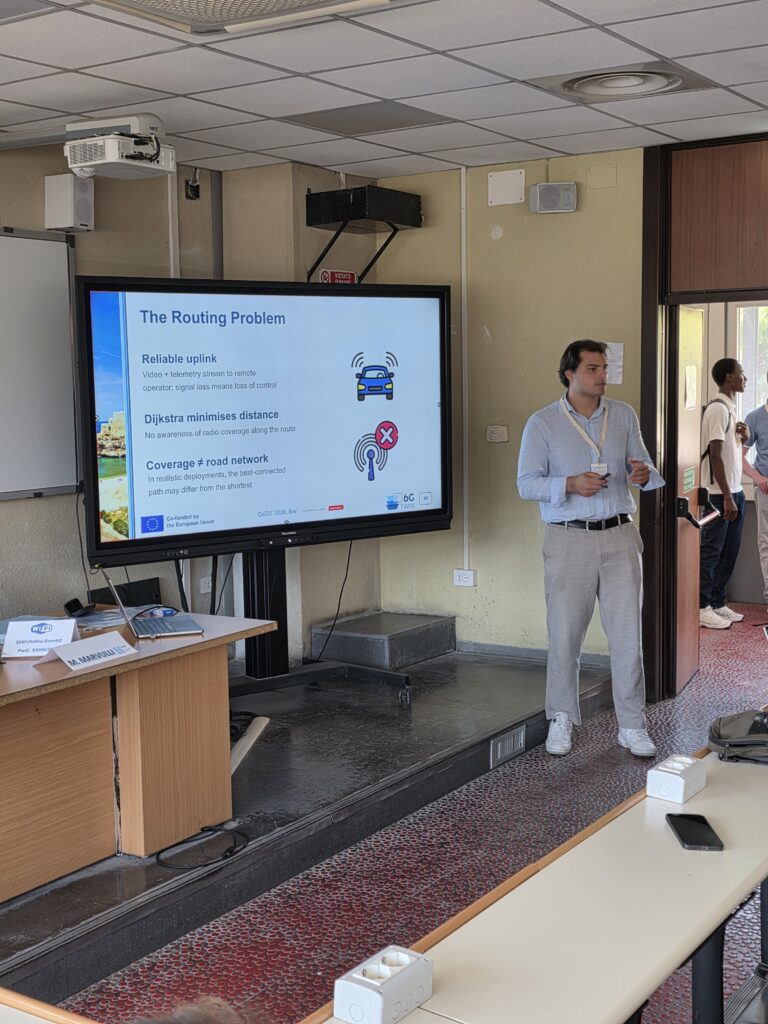
The panel also stimulated valuable discussions with conference participants on the technical challenges associated with federated co-simulation, including scalability, interoperability, synchronisation and the adoption of open standards. These exchanges highlighted the importance of collaborative research efforts in accelerating the development of trustworthy and interoperable Network Digital Twins.
CoDIT 2026 provided an excellent setting for presenting the project’s latest advances to an international audience of researchers and industry experts working in control systems, artificial intelligence, information technologies and smart systems. The event further strengthened the visibility of the 6G-TWIN project within the wider research community and created new opportunities for scientific collaboration around AI-native networking technologies.


Comments are closed